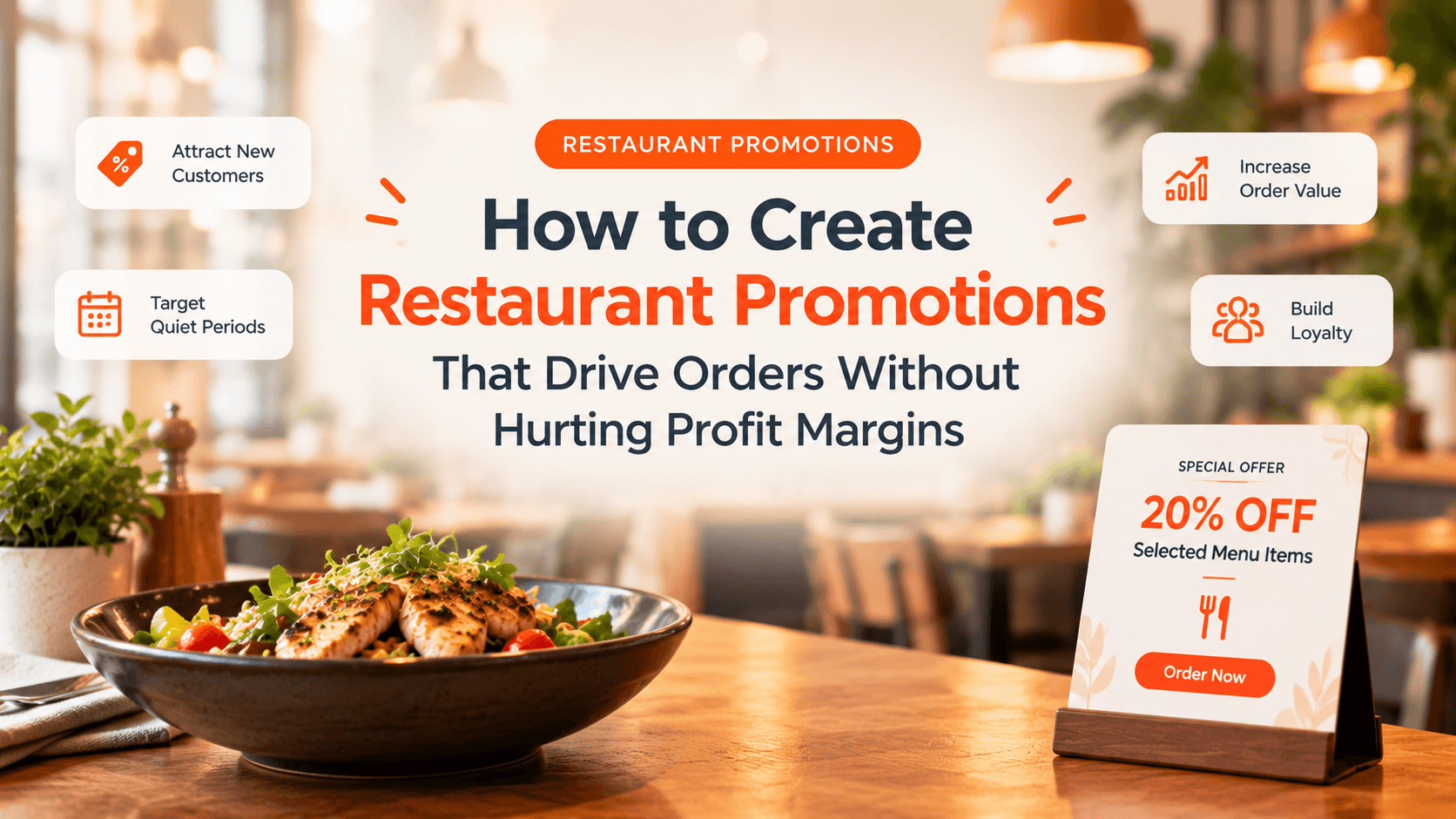
Restaurant promotions can attract new customers, encourage repeat orders, and bring business to quieter periods. However, offering discounts without a clear strategy can reduce profits without creating meaningful growth.
The goal of a successful restaurant promotion is not simply to generate more orders. It is to attract the right customers, encourage valuable purchases, and measure whether the offer delivers worthwhile results.
1. Start With a Clear Promotion Goal
Before choosing a discount, decide what you want to achieve. Are you trying to increase weekday lunch orders, introduce a new menu item, attract first-time customers, or encourage existing customers to return?
Each goal requires a different approach. A limited-time product offer may help introduce a new dish, while a targeted weekday promotion could help increase demand during quieter hours.
2. Choose Offers That Protect Your Margins
A large percentage discount may look attractive, but it reduces the amount earned from every eligible order. Consider alternatives such as meal bundles, a free add-on above a minimum spend, or a promotion on selected products.
For example, a restaurant could offer a meal bundle that combines a main dish with a side and drink. Customers receive clear value, while the restaurant has greater control over the products included and the overall offer.
Always calculate product costs and the discount before publishing a promotion.
3. Use Timing and Eligibility Rules
Not every promotion needs to run all day or apply to every menu item. Schedule offers for quieter periods, limit them to selected products, or set a minimum order value where appropriate.
Clear conditions help control promotional costs and make it easier to understand which offers are working. Make sure customers can see the relevant terms before completing checkout.
4. Promote Through Your Direct Ordering Channel
Your restaurant website and direct online ordering channel give customers a convenient way to discover your offers and place orders.
Feature relevant promotions where customers can easily find them, and share direct-ordering links through your restaurant’s website and social media profiles. Make sure the offer is easy to understand and straightforward to redeem.
5. Measure Results, Not Just Redemptions
A promotion may generate many discounted orders without improving profitability. Review the results against the goal you set before launching it.
Useful indicators include:
Number of orders using the promotion
Average order value during the campaign
Discount cost and estimated contribution
Performance by ordering channel or location, where available
Whether customers return after the offer ends
Compare results with a relevant baseline, such as similar days or periods without the promotion. This helps you understand whether the offer generated additional business or mainly discounted purchases that would have happened anyway.
How TabTake Helps Restaurants Manage Promotions
TabTake’s Promotions tools help restaurants create, schedule, and manage offers across supported ordering channels, products, customer groups, and locations. Restaurants can configure promotion rules, set eligibility conditions, and review available redemption and order activity to understand how offers perform.
By connecting promotions with online ordering and supported customer insights, TabTake helps restaurants organize campaigns and make more informed decisions about future offers.
Make Every Promotion More Purposeful
Effective restaurant promotions start with a clear goal, a carefully structured offer, and a plan to measure results. Rather than relying on constant discounts, focus on offers that fit your customers, menu, operating schedule, and business objectives.
With a more considered approach, restaurants can encourage additional orders while keeping profitability in view.
Explore TabTake Promotions to see how your restaurant can create, schedule, and review offers through a connected workspace.