The hospitality sector in 2026 operates in an environment where digital channels represent a primary growth driver for restaurants, takeaways, caf??s, and food groups across the UK. Choosing the best online food ordering systems is no longer just about publishing an online PDF menu or adding a basic contact form to your website. Today's diners demand frictionless mobile checkout, real-time order tracking, flexible collection and delivery times, and personalized loyalty rewards.
At the same time, restaurant operators face rising food costs, labor constraints, and narrow margins. Relying exclusively on third-party delivery marketplaces charging up to 30% commission per order severely erodes profitability and prevents restaurants from building direct relationships with their guests. Consequently, forward-thinking operators are investing in first-party online ordering software for restaurants to capture direct orders and retain full control over guest communications.
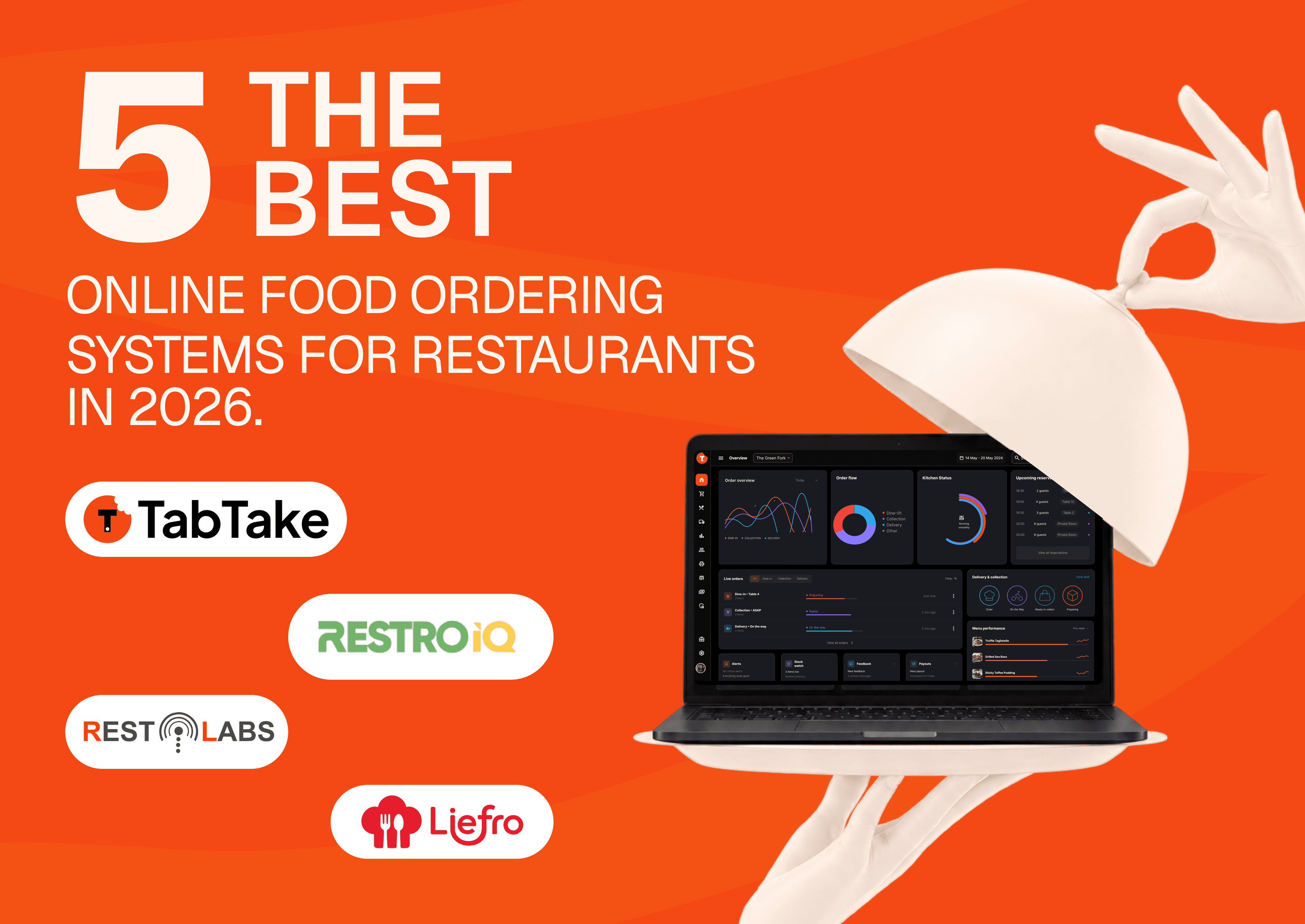
Selecting the right restaurant online ordering system requires evaluating several interconnected factors: direct ordering capabilities, brand customisation, delivery and collection fulfillment, kitchen workflow integration, customer CRM ownership, multi-location management, and long-term software costs. To help hospitality operators navigate their options, this guide compares five leading ordering platforms operating in the UK market in 2026.
What Is an Online Food Ordering System?
An online food ordering system for restaurants is a software platform that enables customers to browse a restaurant's digital menu, configure dish preferences, select fulfillment options, and submit payments via web or mobile devices. From the customer perspective, a modern ordering system provides an intuitive interface for collection, delivery, scheduled advance orders, or QR table ordering.
From the operational perspective, these platforms manage incoming dockets, route orders to kitchen expeditor stations or thermal receipt printers, track customer purchase histories, manage live ingredient availability, and generate performance analytics. Rather than functioning as an isolated marketing channel, an effective digital ordering system acts as a core operational bridge connecting front-of-house customer channels with back-of-house kitchen workflows.
How We Chose the Best Online Food Ordering Systems for 2026
To provide an objective, practical evaluation for hospitality decision-makers, we assessed each platform across twelve key operational criteria:
- Ease of Online Ordering: Mobile responsiveness, checkout speed, and user experience.
- Direct Ordering Capabilities: First-party ordering functionality without forced marketplace commission.
- Delivery and Collection Support: Fulfillment rules, delivery radii, time-slot pacing, and status tracking.
- Menu Management: Multi-tiered categories, nested modifier groups, stock toggles, and daypart scheduling.
- Restaurant Operations: Kitchen receipt printing, real-time order expediting, and workflow automation.
- Customer Data and Retention Tools: Ownership of guest contact data, CRM tools, promotions, and loyalty programs.
- Branding and Customisation: Tailored web storefronts, custom brand tokens, and white-label options.
- Multi-Location Support: Centralized menu templates, tenant hierarchies, and branch-level overrides.
- Integration Ecosystem: Compatibility with POS hardware, kitchen display systems (KDS), and third-party delivery dispatch.
- Suitability for UK Restaurants: Operational alignment with UK takeaway, dining, and multi-unit hospitality standards.
- Pricing and Value: Transparent subscription fee models versus per-order commission structures.
- Scalability: Software stability and flexibility as a restaurant concept expands to multiple sites.
Disclaimer: This comparison is based on publicly available product documentation, industry research, and the operational requirements of UK hospitality businesses in 2026. Product capabilities and pricing structures may evolve over time; restaurant operators are encouraged to verify current technical specs and fee schedules directly with each provider.
Quick Comparison: 5 Best Online Food Ordering Systems for Restaurants
The comparison table below provides a quick overview of how the top five food ordering systems UK operators consider compare across core operational capabilities:
| Platform | Best For | Direct Ordering | Delivery & Collection | QR Ordering | Multi-Location | Broader Restaurant Tools |
|---|---|---|---|---|---|---|
| TabTake | Direct ordering & connected restaurant operations | Yes (0% commission) | Yes (Advanced zones & fee tiers) | Yes (Integrated dine-in) | Yes (Central defaults & branch overrides) | Yes (Kitchen printing, CRM, reservations & loyalty) |
| Flipdish | Branded mobile apps & ordering kiosks | Yes | Yes | Available | Yes (Chain focus) | Limited (POS integration focus) |
| Foodhub | Takeaways seeking a 0% commission marketplace | Yes | Yes | Limited | Plan dependent | Integration dependent (Foodhub EPOS) |
| Slerp | Premium UK hospitality & third-party driver dispatch | Yes | Yes (Fleet dispatch integrations) | Limited | Available | Not a core focus (Ordering & sales focus) |
| Square Online | Businesses using Square POS hardware & payments | Yes | Yes | Yes (Square Pay integration) | Yes (Location sync) | Yes (Square ecosystem dependent) |
1. TabTake — Best for Restaurants Wanting Online Ordering and Operations in One Platform
TabTake represents restaurant technology built for modern hospitality. Designed specifically for food and beverage operators who want to accept direct orders while streamlining day-to-day operations, TabTake treats online ordering as an integral part of your restaurant's overall management system rather than an isolated website widget.
Built on modern web architecture, TabTake enables independent restaurants, takeaways, caf??s, and multi-unit groups to manage selling, fulfillment, kitchen routing, customer marketing, and table management through a single, unified interface.
Direct Online Ordering
Accept commission-free orders directly through your own web channels via first-party online ordering. Customers enjoy a fast, mobile-optimised checkout experience without third-party marketplace commissions deducting from your dish margins.
Branded Storefront
Deploy a high-converting branded digital storefront customized with your brand's specific colors, typography, logos, and high-resolution food photography. Choose between flexible block layouts or bespoke theme templates.
Delivery Orders
Configure granular delivery rules using delivery order management, including custom delivery distance radii, tier-based delivery charges, order preparation buffer times, and minimum spend thresholds.
Collection Orders
Streamline pickup operations with collection orders featuring automated time-slot pacing, collection prep notifications, and instant order status updates sent directly to guests.
Scheduled Orders
Enable guests to place scheduled orders in advance for specific dates and time slots, allowing your kitchen team to pace prep work for catering orders, holiday specials, or busy weekend shifts.
QR Table Ordering
Empower dine-in guests to scan table-specific QR table ordering codes, browse live menus, customize dish options, and complete digital payments directly from their smartphones.
Menu Management
Maintain total control over your food and beverage catalog with multi-tiered category structures, nested modifier options, live out-of-stock toggles, and daypart scheduling through flexible menu management tools.
Order Dashboard
Manage incoming orders across collection, delivery, and dine-in channels through a real-time order dashboard equipped with acoustic alerts and visual status indicators.
Kitchen Printing
Automatically route incoming orders to thermal kitchen receipt printers (ESC/POS) using automated kitchen printing, printing formatted dockets containing dish modifiers, guest notes, and delivery address details instantly upon order confirmation.
Reservations
Manage dine-in table bookings directly within your control dashboard with native table reservations, helping front-of-house staff plan seating schedules and guest arrivals.
Customer CRM and Analytics
Retain 100% ownership of your customer data. Build detailed guest profiles using customer CRM tools and monitor performance metrics through customer analytics to make data-driven menu decisions.
Promotions and Loyalty
Launch targeted discount codes, percentage-off incentives, and structured customer rewards programs using native promotions and loyalty engine tools to drive repeat orders.
Multi-location Management
Manage multiple venues or franchise branches from a single central portal with multi-location management. Maintain global menu master templates while allowing per-branch overrides for local pricing, opening hours, and payment configurations.
Best For
UK restaurants, takeaways, caf??s, and food groups looking for commission-free direct ordering combined with kitchen workflow printing, customer CRM, table bookings, and multi-location management in one platform.
Things to Consider
TabTake is a modern software platform focused on direct ordering and operational efficiency. Restaurants relying on last-mile delivery fulfillment should operate in-house drivers or pair the system with a third-party delivery dispatch partner.
2. Flipdish — Best for Established Restaurant Brands Focused on Digital Ordering
Flipdish is a well-established international provider of direct online ordering software (refer to Flipdish official platform information for details), specializing in white-label digital ordering solutions for growing restaurant chains and multi-unit hospitality brands. The platform focuses heavily on brand control and digital customer acquisition.
Flipdish allows restaurant operators to launch custom-branded native mobile applications (iOS and Android) alongside branded web ordering storefronts and self-service digital ordering kiosks for physical locations. Its automated marketing engine includes automated SMS campaigns and customer loyalty tools designed to encourage repeat orders.
Best For
Established restaurant chains, quick-service brands, and multi-location franchises looking to invest in dedicated white-label mobile apps and in-store self-service ordering kiosks.
Things to Consider
Flipdish typically operates on a model that combines setup fees, monthly software subscriptions, and per-order percentage transaction fees (often around 7% to 10% per order). Restaurants should evaluate total long-term transaction costs compared to fixed-fee alternatives.
3. Foodhub — Best for Takeaways Looking at Direct Ordering Options
Foodhub is a UK-focused online ordering platform and consumer marketplace (refer to Foodhub Business portal information for details) designed primarily for takeaway shops, pizzerias, and fast-food venues. Unlike major delivery aggregators like Just Eat or Deliveroo that charge high per-order commissions, Foodhub operates a 0% commission model for takeaways.
Foodhub provides takeaways with a branded website, inclusion in the regional Foodhub consumer marketplace app, and options for proprietary Foodhub EPOS touchscreen hardware and kitchen printing integration. This makes it an attractive entry point for high-volume takeaway venues transitioning away from high aggregator commission fees.
Best For
High-volume UK takeaways and fast-food outlets seeking a 0% commission marketplace presence alongside dedicated takeaway ordering hardware.
Things to Consider
Foodhub charges takeaways a fixed weekly or monthly software portal fee. Because orders are processed within the broader Foodhub marketplace ecosystem, store customization is more standardized compared to bespoke independent storefronts.
4. Slerp — Best for UK Hospitality Brands Focused on Direct Digital Sales
Slerp is a London-based digital ordering platform tailored specifically for UK hospitality brands, artisan bakeries, dessert shops, and premium restaurant groups (refer to Slerp official platform information for details). Slerp focuses on driving direct digital sales via customized web storefronts and flexible fulfillment channels.
A key strength of Slerp is its deep integration with leading UK on-demand delivery fleets, such as Stuart, Ryde, and Uber Direct. This allows restaurants without in-house delivery drivers to offer automated, real-time courier dispatch directly to online customers. Slerp also excels in scheduled pre-orders for holiday hampers, pop-up events, and nationwide catering drops.
Best For
Premium UK hospitality venues, bakeries, and food brands requiring integrated third-party courier dispatch for local delivery or advanced scheduled pre-orders.
Things to Consider
Slerp charges per-order transaction fees (typically starting around 7.5% per transaction plus payment processing) alongside third-party delivery dispatch fees. Operators should account for fulfillment delivery costs when calculating margin structures.
5. Square Online — Best for Restaurants Already Using the Square Ecosystem
Square Online (part of Square for Restaurants) is a widely used restaurant ordering software UK operators adopt (refer to Square for Restaurants UK platform information for details), particularly when already utilizing Square's point-of-sale (POS) hardware and payment processing services. Square provides a unified ecosystem connecting physical counter sales with e-commerce storefronts.
With Square Online, restaurants can publish a digital ordering site that automatically syncs menu items, pricing, and ingredient inventory with their in-person Square POS. Square supports pickup/collection orders, local delivery via third-party couriers, QR code table ordering, and kitchen display systems (KDS). Square currently allows UK restaurants to manage in-person and online channels through a single central dashboard.
Best For
Small-to-medium caf??s, bars, and restaurants already operating on Square POS hardware who want an integrated, simple web ordering add-on.
Things to Consider
While Square offers a free software plan, restaurants pay standard credit card processing fees (2.9% + 30p per online order). Accessing advanced kitchen workflow routing, multi-location management, or dedicated restaurant POS features requires upgrading to paid Square for Restaurants Plus plans (??69+/month per location).
Which Online Food Ordering System Is Best for Your Restaurant?
Because every food venue operates under different constraints, there is no single system that is objectively superior for every business. The optimal choice depends on your business model, customer base, and operational requirements:
Choose TabTake if...
You want commission-free direct online ordering connected directly with back-of-house kitchen printing, real-time order expediting, native table reservations, customer CRM data, and multi-location management without paying per-order commissions.
Consider Flipdish if...
You are an established multi-unit chain or franchise with a dedicated marketing budget seeking custom white-label iOS/Android mobile apps and self-service in-store kiosks.
Consider Foodhub if...
You run a high-volume UK takeaway or fast-food shop seeking a 0% commission marketplace presence alongside specialized EPOS takeaway hardware.
Consider Slerp if...
You operate a premium UK restaurant or bakery requiring automated third-party courier dispatch (e.g. Stuart, Uber Direct) or advanced scheduled pre-orders for catering drops.
Consider Square if...
Your venue already uses Square POS hardware and card readers for in-person transactions and you want a simple, unified online store sync.
What Features Matter Most in an Online Ordering System?
When evaluating potential best online ordering system for restaurants vendors, prioritize these twelve essential capabilities:
Mobile-first ordering
Over 80% of online food orders take place on mobile smartphones. Your ordering interface must load instantly, feature large touch targets, and support rapid payment methods like Apple Pay and Google Pay.
Menu management
Your team should be able to update dish prices, add daily specials, toggle out-of-stock items, and manage complex dish option groups (e.g. burger toppings, salad dressings) in real time.
Delivery and collection
Look for flexible fulfillment settings that allow you to set custom delivery radius boundaries, minimum order values, preparation lead times, and collection time-slot pacing.
Scheduled orders
Allowing guests to order hours or days in advance helps your kitchen staff manage preparation workloads during peak shifts and holiday periods.
Direct customer relationship
Ensure you maintain 100% ownership of customer email addresses, phone numbers, and order histories to drive direct marketing campaigns.
Payment options
Offer secure, flexible payment gateways with competitive processing rates and support for major debit/credit cards and digital wallets.
Order management
A real-time expeditor dashboard lets front-of-house staff monitor order statuses across collection, delivery, and dine-in channels simultaneously.
Kitchen workflow
Automated routing of incoming orders to thermal kitchen receipt printers (ESC/POS) or kitchen display screens prevents lost orders and speeds up prep times.
Promotions and loyalty
Built-in promo code engines, percentage discounts, and structured loyalty points encourage repeat business and higher average order values.
Reporting and analytics
Clear dashboard reports help you identify top-selling menu items, peak sales hours, and customer retention metrics.
Multi-location scalability
If you plan to expand, choose software that supports central menu master management alongside per-branch overrides for local pricing and opening hours.
Reliable support
Responsive customer support ensures technical queries or printer setup questions are resolved quickly without trading downtime.
Direct Ordering vs Third-Party Delivery Marketplaces
A common decision faced by restaurant owners is choosing between first-party direct online ordering platforms and third-party delivery marketplaces (such as Just Eat, Deliveroo, or Uber Eats). It is helpful to recognize that direct ordering platforms and aggregators serve distinct purposes.
Third-party marketplaces function primarily as customer acquisition channels. They expose your restaurant to a broad audience of diners searching for local food options. However, marketplaces charge high per-order commissions (typically 25% to 35%), hide guest contact details, and compete for customer loyalty.
Direct ordering platforms, by contrast, are designed for customer retention and operational efficiency. By encouraging repeat customers to order directly through your branded storefront, your business benefits from:
- Higher Margin Profits: Eliminate steep marketplace commissions on orders placed by existing loyal customers.
- Full Data Ownership: Capture customer contact details and purchase histories for targeted email and SMS marketing.
- Complete Brand Control: Deliver an uncompromised brand experience tailored to your restaurant's identity.
- Direct Guest Communication: Resolve order queries or delivery updates directly with your guests.
Many successful UK hospitality operators adopt a hybrid model: using third-party marketplaces to acquire new guests, while deploying a first-party direct ordering platform like TabTake to convert those guests into repeat, direct customers.
Frequently Asked Questions
What is the best online food ordering system for restaurants in 2026?
The best system depends on your venue's specific operational needs. TabTake is ideal for restaurants wanting commission-free direct ordering integrated with kitchen printing and table management; Flipdish excels for multi-unit brands needing white-label apps; Foodhub suits high-volume takeaways; Slerp fits premium brands requiring delivery dispatch; and Square Online integrates seamlessly for existing Square POS users.
What should a restaurant look for in an online ordering system?
Operators should prioritize mobile responsiveness, menu management flexibility, delivery and collection rules, kitchen receipt printing, customer data ownership, loyalty tools, and transparent pricing structures.
Can restaurants take orders directly from their own website?
Yes. Direct online ordering platforms allow restaurants to embed an ordering storefront or link directly from their official website and social media profiles, accepting orders without third-party commission fees.
Is an online ordering system different from a delivery marketplace?
Yes. A direct online ordering system processes first-party orders placed on your own website or app with 0% commission. A delivery marketplace is a third-party directory app that charges commission fees per order in exchange for platform discovery.
Can online ordering systems support collection as well as delivery?
Yes. Modern platforms allow restaurants to enable collection (click-and-collect), local delivery, scheduled pre-orders, or QR table ordering within the same control dashboard.
Do online food ordering systems work for multiple restaurant locations?
Yes. Leading systems like TabTake support multi-location management, allowing brand owners to maintain global menu defaults while enabling localized pricing, opening hours, and payment rules per branch.
Does TabTake support direct online ordering?
Yes. TabTake provides commission-free direct online ordering for collection, delivery, scheduled orders, and QR table ordering through branded digital storefronts.
Is TabTake suitable for takeaways?
Yes. TabTake includes specialized takeaway features, including automated ESC/POS kitchen thermal printing, delivery zone radius management, minimum spend rules, and rapid order expeditor dashboards.
Can TabTake support restaurant groups?
Yes. TabTake features robust multi-branch architecture, enabling central menu management and localized branch overrides for multi-site restaurant groups and franchises.
Can online ordering connect with kitchen operations?
Yes. Connected platforms like TabTake automatically route online orders to thermal kitchen receipt printers and real-time expeditor screens, ensuring smooth kitchen ticket workflows upon order confirmation.
Final Verdict: Choose a System That Can Grow With Your Restaurant
Selecting the right digital ordering infrastructure is a critical strategic decision for any modern hospitality business. Each platform evaluated in this guide offers distinct strengths: Flipdish provides custom mobile apps for established chains; Foodhub offers a 0% commission takeaway marketplace; Slerp connects premium brands with local courier fleets; and Square Online connects cleanly with Square POS hardware.
For restaurants looking beyond a standalone ordering widget, TabTake brings direct ordering together with back-of-house kitchen printing, table reservations, customer CRM data, and multi-location operations in one platform. Compare transparent subscription plans on our pricing page, or get in touch with our team today. By connecting customer-facing channels with kitchen workflows, TabTake enables restaurants to take more orders and run their operations better.