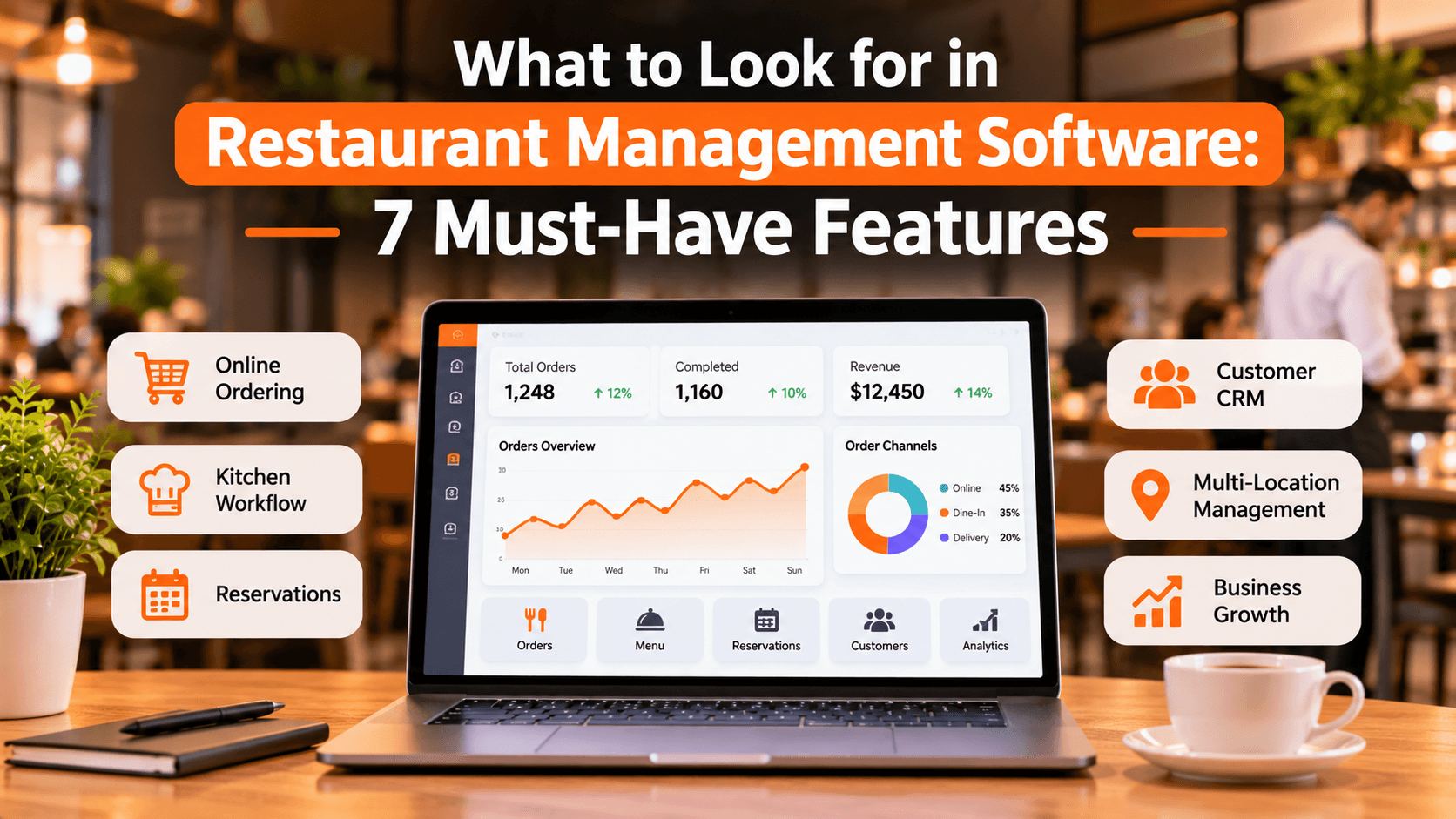
Choosing restaurant management software is an important business decision. The right platform can help you manage daily operations, serve customers more efficiently, and create better opportunities for growth.
But with so many tools available, how do you know which features actually matter?
Instead of choosing software based on the number of features it advertises, focus on the capabilities that solve real restaurant challenges.
Here are seven features worth evaluating before making your decision.
1. Centralized Order Management
Restaurants often receive orders through multiple channels, including websites, delivery, collection, and dine-in services. Managing these separately can create unnecessary work and increase the risk of missed orders.
Look for a system that brings incoming orders into one organized dashboard. Your team should be able to monitor order progress and manage service without constantly switching between different tools.
2. Direct Online Ordering
Your restaurant should have a convenient way for customers to order directly from your own website or branded storefront.
A good online ordering system should support:
Mobile-friendly digital menus
Pickup and delivery options
Clear pricing and menu availability
A simple checkout experience
Direct ordering also gives restaurants more control over their customer relationships and reduces dependence on third-party marketplaces.
3. Connected Kitchen Workflows
Taking an order is only the beginning. It must reach the kitchen accurately and quickly.
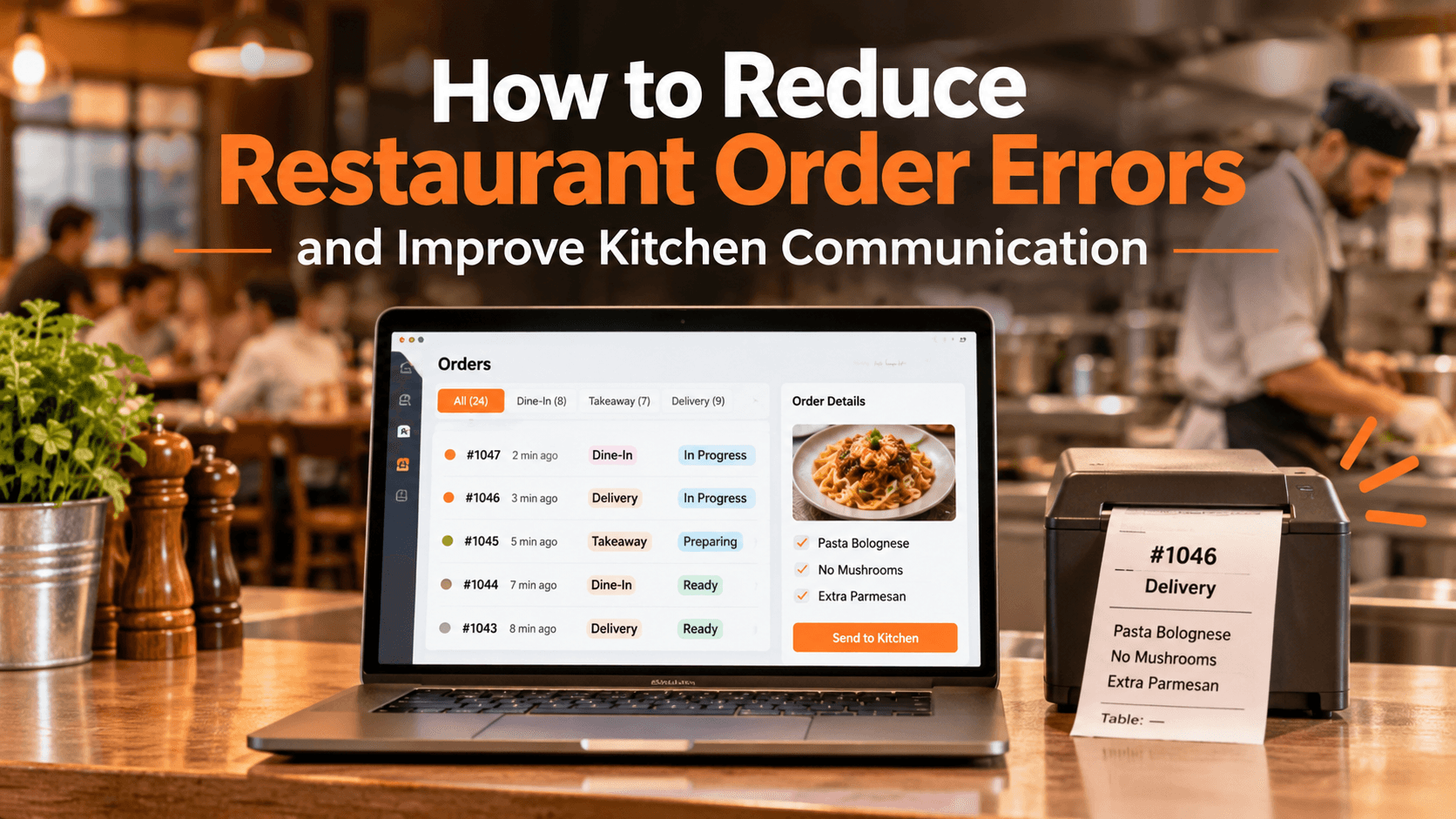
Look for software that supports kitchen printing or kitchen display workflows, so staff can receive order details without relying on manual communication.
A connected ordering and kitchen process can help reduce confusion during busy service periods.
4. Flexible Menu Management
Menu changes are part of everyday restaurant operations. Prices change, items become unavailable, and promotions need updating.
Your software should make it easier to manage menu items, prices, modifiers, and availability across the ordering channels you use.
Centralized menu management helps maintain a more consistent experience for customers.
5. Reservations and Table Management
For restaurants offering dine-in service, managing reservations is another important consideration.
A suitable system should help staff organize bookings, manage tables, and keep guest details accessible.
Connecting reservations with other restaurant workflows can make it easier to manage the customer experience from booking to dining.
6. Customer Insights and Loyalty
Getting a first-time order is valuable, but encouraging customers to return is just as important.
Customer profiles, order history, analytics, and loyalty tools can help restaurants understand purchasing behavior and create more relevant promotions.
Before choosing a platform, check whether it supports customer engagement features that fit your retention strategy.
7. Multi-Location Management
If your restaurant operates across multiple branches, managing each location separately can become difficult.
Look for a platform that supports centralized control while allowing appropriate branch-level settings. This can help maintain consistency across locations without losing the flexibility each venue needs.
Why Connected Restaurant Software Matters
Having separate tools for orders, menus, kitchen operations, and customer engagement can make everyday management more complicated.
A connected platform brings important workflows together, helping restaurant teams spend less time switching between systems and more time focusing on service and customers.
TabTake brings together direct online ordering, POS and order management, QR table ordering, reservations, kitchen workflows, customer CRM, loyalty, and multi-location management. Its product suite is designed to connect these restaurant operations in one platform.
Is Your Current Restaurant Software Ready for Growth?
If your team is managing orders across disconnected systems, updating menus manually, or struggling to maintain consistent operations across branches, it may be time to evaluate a more connected solution.
The best restaurant management software is not necessarily the one with the longest feature list. It is the one that fits your workflows today and supports the direction in which your business is growing.
Ready to see how connected restaurant management works?
Explore how TabTake can help you manage ordering, menus, kitchen operations, reservations, and customer engagement from one platform