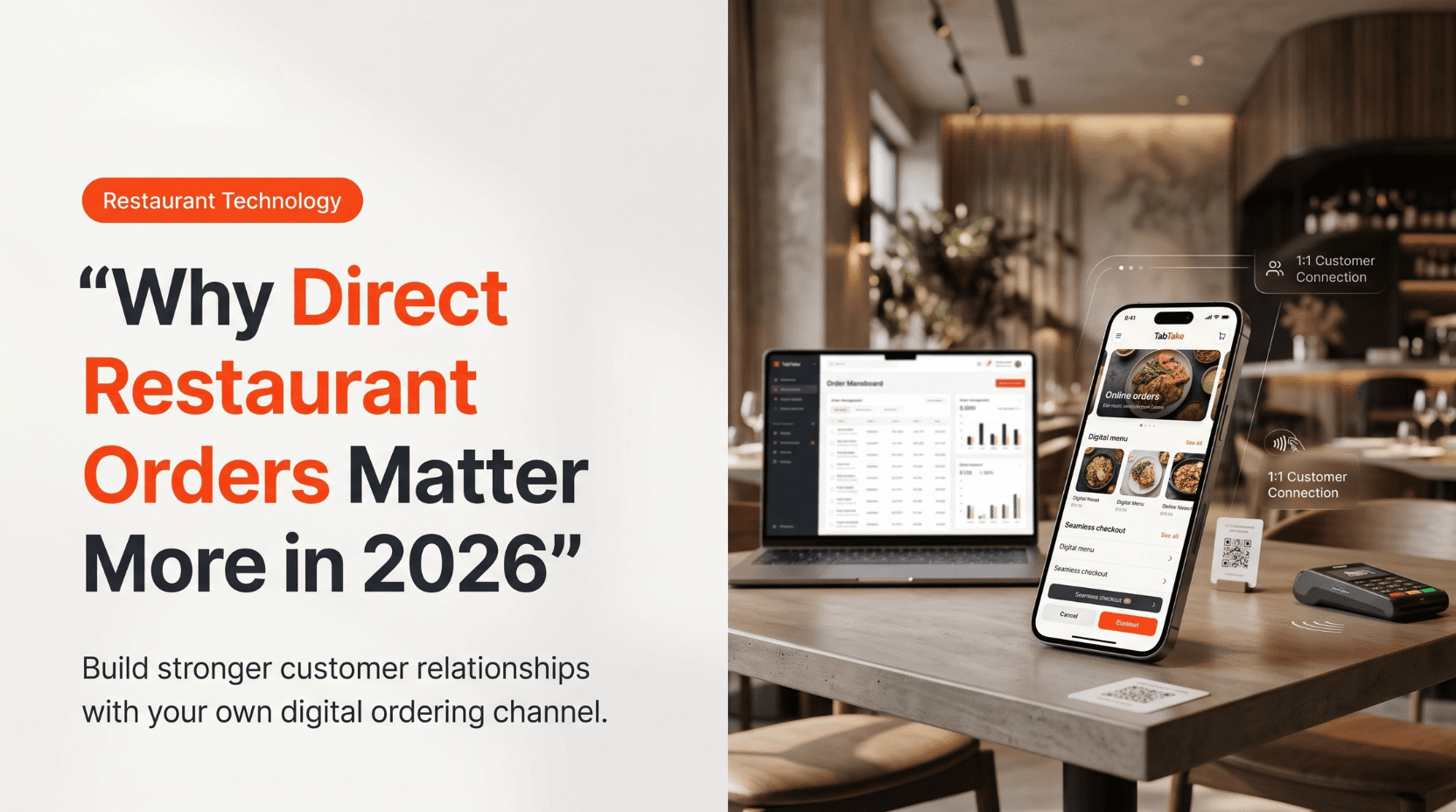
Restaurant ordering has changed dramatically over the last few years.
Customers now expect to discover a restaurant online, browse its menu from their phone, choose delivery or collection, pay digitally, and receive a smooth experience from the first click to the final handover.
But there is another change happening beneath the surface.
Restaurants are thinking more carefully about where their orders come from and who owns the customer relationship behind those orders.
Third-party marketplaces can help restaurants reach new customers, but they can also place another platform between the restaurant and the person buying its food. As ordering technology continues to evolve, more restaurant owners are looking for ways to build a stronger direct channel of their own.
That is why direct restaurant orders are becoming increasingly important in 2026.
The Order Is More Than a Transaction
It is easy to think of an online order as simply a sale.
A customer chooses a few items, pays, and the restaurant prepares the food.
But every order can represent something much bigger.
It can tell a restaurant what customers prefer, when they order, which products they return for, whether they choose delivery or collection, and what brings them back.
When the ordering relationship sits entirely inside a third-party marketplace, much of that relationship is controlled by the platform.
When customers order directly, the restaurant has a much stronger opportunity to build a relationship around its own brand.
That difference becomes increasingly valuable as restaurants compete not only for today's order, but for the next one.
Third-Party Platforms Still Have a Place
This does not mean restaurant marketplaces are disappearing.
They can be valuable discovery channels, particularly for customers who are searching for somewhere new to eat.
The problem starts when a restaurant becomes completely dependent on them.
If most online orders come through external platforms, the restaurant may have less control over the customer journey, branding, promotions, pricing strategy, and customer relationship.
Direct ordering gives restaurants another option.
Instead of asking customers to find the restaurant through a marketplace every time, the restaurant can create a destination that customers can return to directly.
The goal is not necessarily to choose one channel and eliminate every other channel.
It is to build a healthier mix.
Your Restaurant Website Can Become an Ordering Channel
A restaurant website does not have to be just a digital business card.
It can become one of the most valuable places for customers to order.
A branded online ordering experience allows customers to see the restaurant's own menu, understand its service options, choose delivery or collection, and complete their order without leaving the restaurant's digital environment.
This also creates a more consistent brand experience.
The colours, imagery, menu presentation, promotions, and messaging can all feel like part of the same restaurant rather than part of a generic marketplace.
For customers who already know where they want to eat, that simplicity matters.
Direct Ordering Should Be Easy to Find
Having a direct ordering system is only the beginning.
Customers need to know it exists.
A restaurant's website, Instagram profile, Google presence, receipts, packaging, table cards, email communication, and other customer touchpoints can all become opportunities to guide people back to the restaurant's own ordering channel.
This creates a simple habit:
Know the restaurant → visit the restaurant's ordering channel → order directly.
Over time, that habit can become more valuable than constantly trying to win the same customer through a marketplace.
The Digital Menu Has a Bigger Role Than It Used To
A direct ordering experience starts with the menu.
Customers should be able to understand the restaurant's offering quickly, find what they want, customise items where necessary, and see accurate prices and availability.
That means a digital menu should not simply be a PDF version of a printed menu.
It should be designed for ordering.
Images, categories, modifiers, availability, pricing, promotions, and product information all contribute to the customer's decision.
A restaurant that can update these elements quickly also has more control over the experience.
With TabTake, restaurants can manage products, prices, modifiers, availability, categories, and location-specific menu settings from a central system and publish changes to their supported ordering channels.
Delivery and Collection Need to Feel Just as Simple
Direct ordering only works when the fulfilment experience works too.
Customers want to know when their food will be ready, how much delivery will cost, whether their location is covered, and when they can expect their order.
Collection customers may want to choose a convenient time.
Delivery customers may need a clear delivery area and estimated preparation time.
A strong restaurant ordering system connects these details to the ordering experience instead of treating them as separate processes.
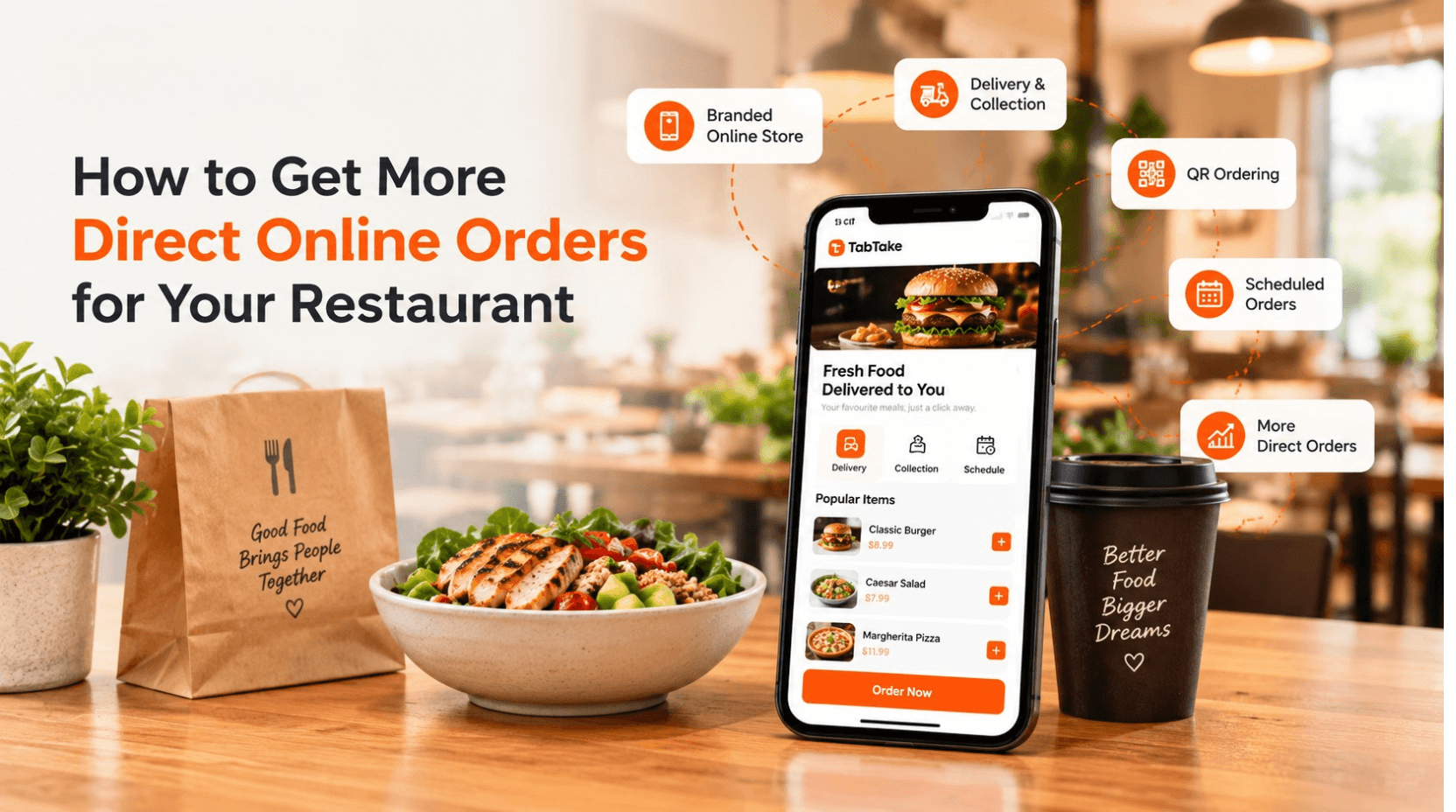
TabTake supports direct delivery, collection and scheduled ordering, allowing restaurants to configure fulfilment around how their operation actually works.
Direct Orders Can Strengthen Customer Relationships
The long-term value of direct ordering goes beyond reducing dependence on external platforms.
It is about building a customer relationship around your own restaurant.
A customer who orders directly can become a repeat customer.
They may discover a new promotion, return for a favourite dish, join a loyalty programme, or choose the restaurant again because the ordering experience is familiar.
That creates a different kind of growth.
Instead of constantly paying attention to acquiring the next order, restaurants can start thinking about how to turn existing customers into repeat customers.
This is where customer data, loyalty, promotions, and order history become particularly useful.
The Best Direct Ordering Experience Is Connected
Customers do not think about restaurant technology in separate products.
They simply want to order.
Behind that simple experience, however, several things need to work together.
The menu needs to be accurate.
The payment needs to work.
The order needs to reach the restaurant.
The kitchen needs the right information.
Delivery or collection needs to be organised.
The customer needs clear confirmation.
And the restaurant needs to understand what happened after the order was completed.
This is why connected restaurant technology matters.
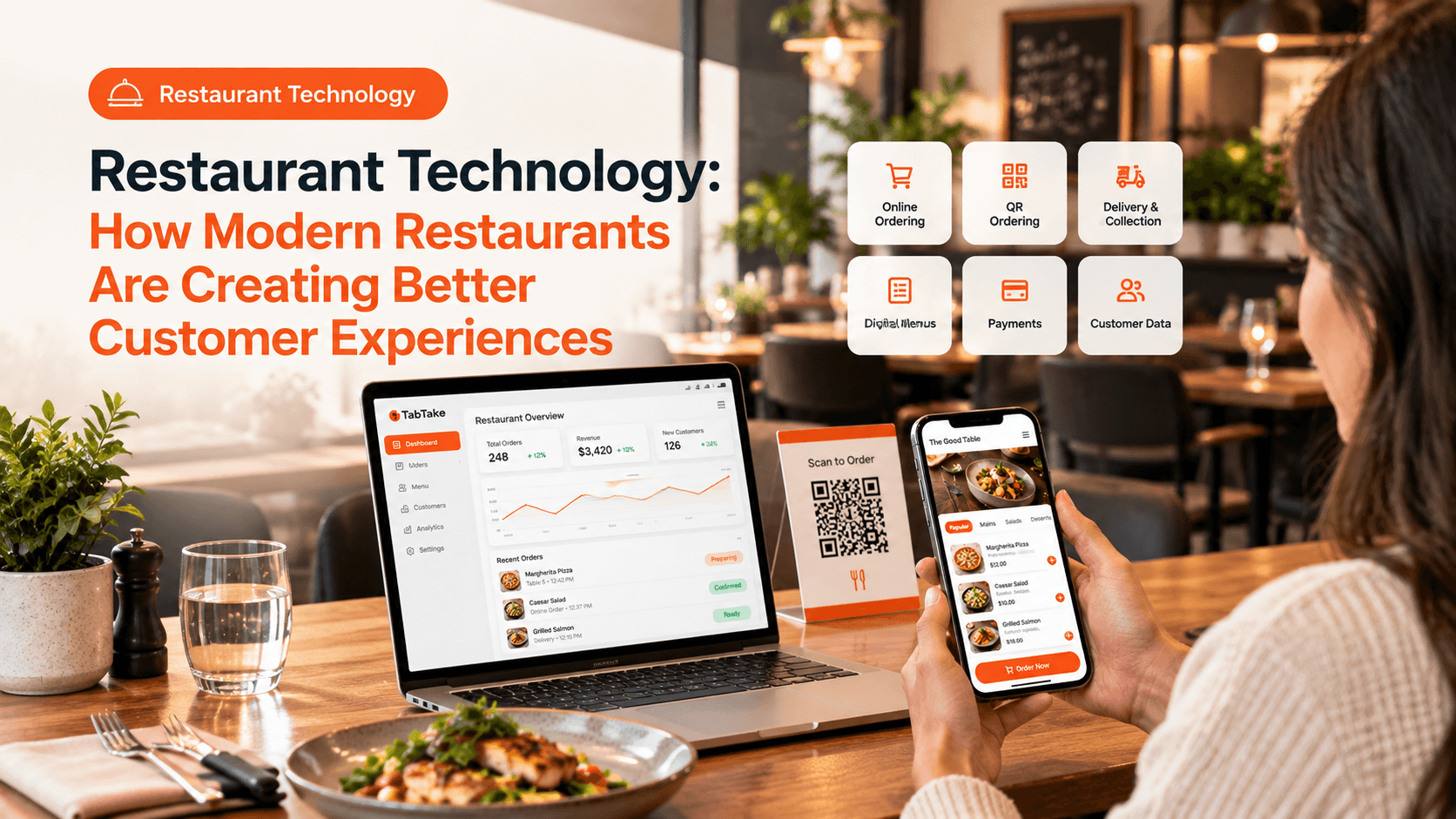
TabTake brings direct ordering together with branded storefronts, menus, payments, delivery, collection, QR ordering, customer tools, analytics and operational workflows, giving restaurants a more connected way to manage their digital ordering experience.
The Future of Restaurant Ordering Is More Direct
The restaurant industry is entering an interesting period.
AI is changing how people search for products and services. New ordering experiences are beginning to appear. Traditional delivery platforms are evolving. Customers are becoming more comfortable ordering digitally.
But one principle remains important:
Restaurants need a direct relationship with their customers.
The technology used to create that relationship may continue to change.
Today it might be a restaurant website, mobile ordering, QR ordering, or a branded storefront. Tomorrow, customers may discover and initiate orders through entirely new interfaces.
Restaurants with a strong digital foundation will be better prepared for those changes.
Direct Ordering Is a Long-Term Strategy
Getting more direct restaurant orders is not simply about moving customers away from another platform.
It is about building an ordering channel that belongs to the restaurant.
It gives the business more control over its brand, its customer journey, its menu, its fulfilment options, and its relationship with the people who choose to order.
That makes direct ordering more than another sales channel.
It becomes part of the restaurant's long-term digital strategy.
For restaurants looking to grow in 2026, the question is not simply:
“Where can we get more orders?”
It is:
“How can we build more of the customer relationship ourselves?”
That is where direct ordering becomes increasingly powerful.
Take the First Step Toward Your Dream Restaurant
Explore our solutions, test out live storefront themes, and see how TabTake can power your grand opening.