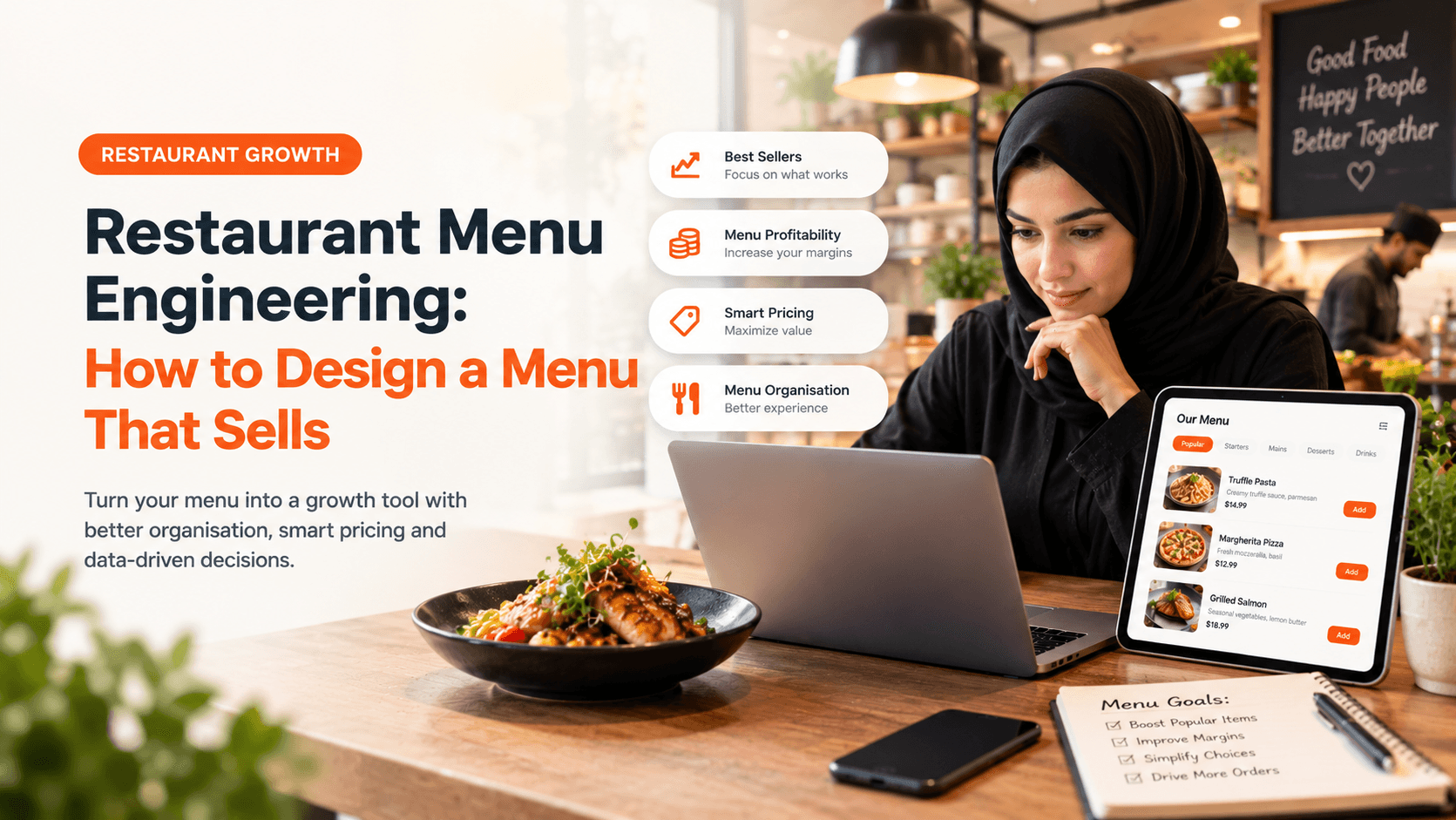
A restaurant menu is more than a list of dishes. It influences what customers choose, how much they spend, and which items become favorites. With the right approach to restaurant menu engineering, you can make your menu easier to navigate while supporting better business decisions.
What Is Restaurant Menu Engineering?
Restaurant menu engineering is the process of reviewing menu items based on their popularity, profitability, pricing, and customer demand. Instead of guessing which dishes deserve attention, restaurant owners can use sales information and food costs to make more informed decisions.
The goal is simple: build a menu that works for both your customers and your business.
1. Identify Your Best-Performing Dishes
Start by reviewing which items sell most often and which contribute the most profit. A popular dish is not always your most profitable one, so consider both sales volume and ingredient costs.
Use these insights to decide which items to feature, which recipes may need reviewing, and which dishes are no longer performing well.
2. Make Your Menu Easy to Navigate
Customers should be able to find what they want without searching through a confusing list. Organize dishes into clear categories, use descriptive item names, and keep descriptions concise.
For digital menus, high-quality food photography and clear pricing can help customers understand their options. Dietary labels and customization choices can also make ordering easier when relevant.
3. Review Pricing and Add-Ons
Menu prices should reflect ingredient costs, preparation effort, operating expenses, and the value customers receive. Review prices regularly rather than making changes based on guesswork alone.
Consider suitable add-ons, sides, drinks, or meal combinations that complement the main dish. Keep recommendations relevant and transparent so customers can make their own choices.
4. Keep Your Digital Menu Updated
Outdated prices, unavailable dishes, and incorrect descriptions can frustrate customers and create extra work for staff.
A digital menu makes it easier to update products, prices, modifiers, and availability. If you operate multiple ordering channels or locations, centralized menu management can also help keep information consistent.
5. Use Data to Improve Over Time
Menu engineering is not a one-time task. Review sales trends regularly, test changes carefully, and compare results before deciding what to keep.
Track useful measures such as item popularity, average order value, and profitability where reliable data is available. Small, informed improvements can help you refine your menu without changing everything at once.
How TabTake Helps with Digital Menu Management
TabTake helps restaurants manage menu items, categories, prices, modifiers, schedules, and availability from a connected workspace. Restaurants can publish menu updates across supported online ordering and QR ordering experiences, with options for multi-location menu management.
By keeping digital menus organized and up to date, restaurant teams can spend less time managing scattered menu changes and more time improving the customer experience.
Explore TabTake Menu Management to learn more.
Frequently Asked Questions
What is the purpose of restaurant menu engineering?
It helps restaurants understand which dishes perform well, review profitability, improve menu organization, and make more informed pricing decisions.
How often should a restaurant review its menu?
Review performance regularly, such as monthly or quarterly, and whenever ingredient costs, customer demand, or seasonal availability change significantly.
Can a digital menu help restaurant owners?
Yes. Digital menus make it easier to update prices, descriptions, modifiers, and item availability, especially when a restaurant offers online or QR ordering.