The way people order at restaurants has changed.
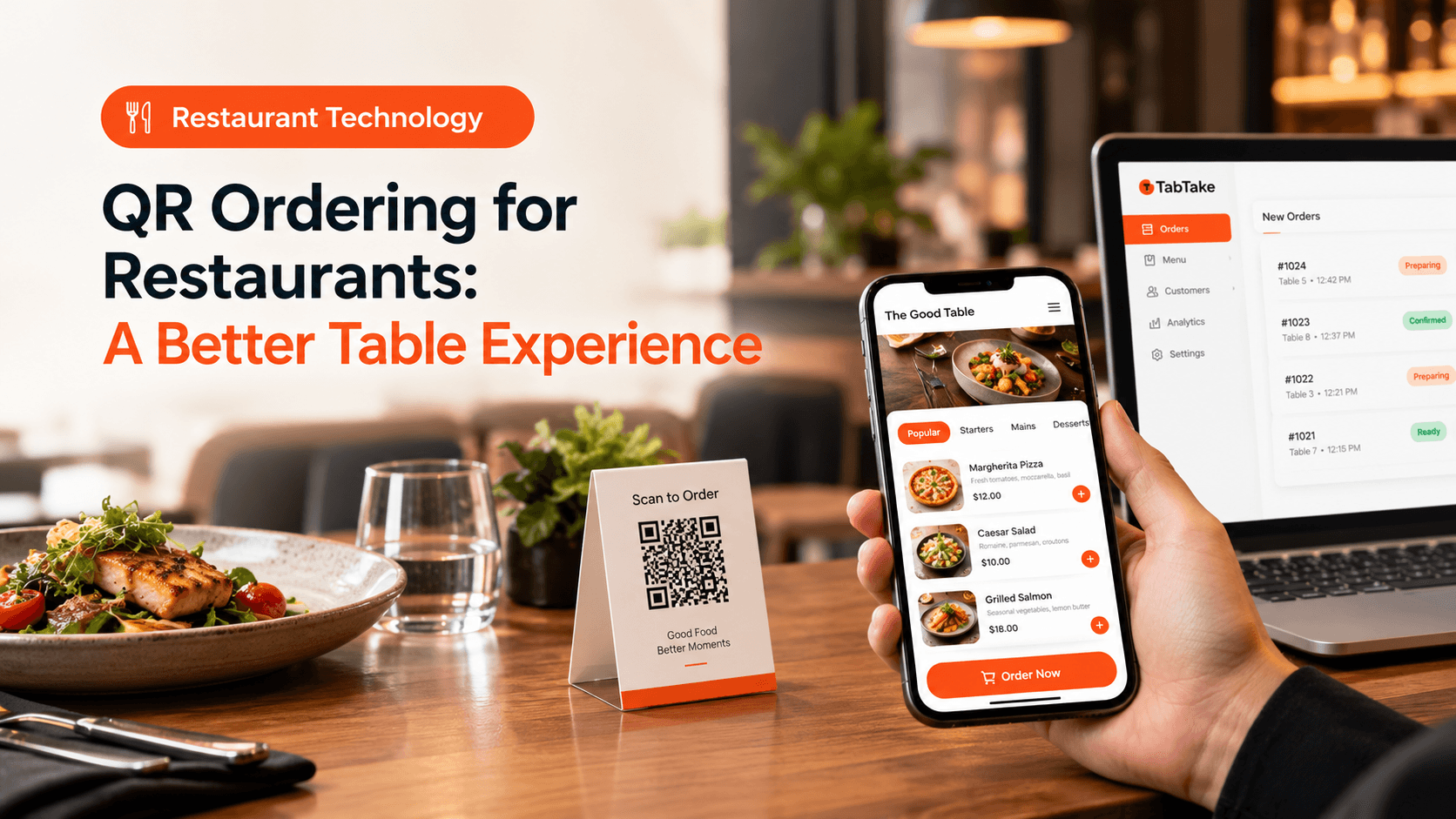
A guest can sit down, scan a small QR code on the table, open a digital menu, explore the dishes, customize an order, and send it to the kitchen — all from the phone they already have in their hand.
What once felt like a novelty has gradually become part of the modern restaurant experience. But the real opportunity with QR ordering for restaurants is not simply replacing a printed menu with a digital one. It is about removing friction from the dining experience while giving restaurant teams a smarter way to manage orders.
When the technology is designed well, customers barely think about it. They simply scan, browse, order, and continue enjoying their meal.
The Table Has Become Part of the Digital Experience
For years, the restaurant table was almost entirely physical. A menu arrived, a server took the order, and the rest of the experience happened through face-to-face interactions.
Today, the table can also become a digital touchpoint.
A QR code gives customers immediate access to the restaurant's menu without asking them to wait for someone to bring it over. For a busy restaurant, that small difference can have a surprisingly large impact.
Imagine a Friday evening when every table is occupied. Some guests have just arrived. Others are ready to order dessert. Another table wants another round of drinks. The team is moving constantly between tables.
A good QR ordering experience gives guests another way to take action when they are ready.
That does not make the experience less personal. In many cases, it allows staff to be more present where their attention is genuinely needed — welcoming guests, answering questions, delivering food, and creating the hospitality that technology cannot replace.
A Digital Menu Should Feel Like Part of Your Brand
The menu is one of the most important parts of a restaurant's identity.
It introduces the food, communicates the personality of the business, and influences what customers choose. Moving that experience onto a phone should not mean reducing it to a basic list of items and prices.
A well-designed digital menu can make dishes easier to discover, showcase food photography, explain ingredients, highlight popular choices, and make customisation simple.
It can also be updated far more easily than a printed menu.
When a dish changes, a price needs updating, or a seasonal item is introduced, the digital menu can reflect that change without printing another stack of menus.
This becomes particularly valuable for restaurants that change their offering regularly or operate across multiple locations.
The best QR ordering experiences therefore feel less like a technical system and more like an extension of the restaurant itself.
Convenience Matters More Than the QR Code
It is easy to focus on the QR code because it is the visible part of the experience.
But scanning is only the beginning.
What happens after the scan is what determines whether the experience is actually useful.
If the menu takes too long to load, the interface is difficult to navigate, the ordering process contains unnecessary steps, or customers cannot easily understand what happens after they place an order, the QR code has not solved anything.
The experience needs to feel immediate.
A customer should be able to sit down, scan the code, recognise the restaurant, find what they want, make their choices, and place an order without having to learn how the system works.
That simplicity is especially important on mobile. The customer's phone is now the ordering interface, so every interaction needs to feel natural on a small screen.
QR Ordering Can Change the Rhythm of Service
There is another advantage that is easy to overlook.
QR ordering can change when customers choose to interact with the restaurant.
Instead of every order depending on a server being available at exactly the right moment, guests can initiate the interaction themselves.
A table that is ready to order can do so.
A guest who wants another drink can place another order.
A group that wants to take its time looking through the menu can do that without feeling pressured.
This creates a more flexible rhythm between the customer and the restaurant.
For restaurant teams, that flexibility can become particularly valuable during busy periods. Orders can enter the operational workflow digitally rather than relying entirely on handwritten notes, verbal communication, or repeated trips between tables and the service area.
The technology is doing something useful in the background: reducing small points of friction that accumulate throughout a busy service.
The Real Value Comes From Connecting the Experience
A QR ordering system becomes much more powerful when it is connected to the rest of the restaurant operation.
The customer sees a menu on their phone. Behind that simple interface, however, there is an entire process taking place.
The order needs to reach the right team. The kitchen needs the correct information. Staff need visibility into what has been ordered. The customer needs confidence that the order has gone through.
When these parts are connected, the experience becomes much smoother.
This is why modern restaurant ordering platforms are moving beyond individual features and toward connected ecosystems. The goal is not simply to offer a QR menu. It is to connect the digital customer experience with the operational reality of the restaurant.
For restaurant owners, that distinction matters.
A QR code that simply opens a PDF menu is very different from a QR ordering experience that allows customers to browse, customise, order, and send those orders directly into the restaurant's workflow.
There Is Also a Revenue Opportunity
A better ordering experience does not have to mean a more aggressive sales experience.
In fact, digital menus can create opportunities to make relevant choices easier to discover.
A customer ordering a burger might see the available sides. Someone ordering a main course might discover a popular dessert. A table ordering drinks might find complementary options without needing to ask a server.
These moments can feel completely natural when they are built into the menu experience.
The important thing is relevance.
Customers do not want to navigate through endless promotions when they are hungry. They want to find what they came for quickly, with useful suggestions available when they make sense.
A well-designed digital ordering experience can do exactly that.
QR Ordering Is Becoming Part of a Bigger Restaurant Strategy
The most interesting thing about QR ordering is that it does not have to exist separately from a restaurant's wider digital strategy.
The same restaurant may already be using online ordering for delivery, collection, scheduled orders, or direct customer relationships.
QR ordering adds another entry point.
Instead of thinking about online ordering and table ordering as completely different systems, restaurants can think about them as different ways customers enter the same digital ordering ecosystem.
That creates a more consistent experience.
Whether someone discovers the restaurant through its website, orders from home, scans a QR code at the table, or returns later for collection, the restaurant can build a more connected relationship across those touchpoints.
A Better Ordering Experience Starts With Less Friction
Restaurant technology is often at its best when it feels invisible.
Customers should not have to think about the software behind their order. They should simply feel that the restaurant is easy to use.
That is what makes QR ordering valuable.
It can make the menu immediately accessible. It can give guests more control over when they order. It can reduce repetitive work for staff. And, when connected to the wider ordering operation, it can help create a smoother experience from the table to the kitchen.
TabTake brings QR table ordering together with digital menus and the wider restaurant ordering journey, giving restaurants a way to connect the customer experience with the systems working behind it.
For a restaurant looking to modernise without making service feel complicated, that is the real promise of QR ordering.
Not more technology for the sake of technology.
Just a simpler way for customers to interact with the restaurant when they are ready.
The Future of Table Ordering Is Already Here
The restaurant table is no longer just where customers sit and eat.
It can also be where they discover the menu, place an order, explore additional choices, and interact with the restaurant digitally.
QR ordering gives restaurants a practical way to bring that experience together.
But the strongest implementations are not built around the QR code itself. They are built around the customer.
Make the menu easy to access. Make the ordering process intuitive. Keep the experience connected to the restaurant's operations. And use technology to remove friction rather than add another layer of complexity.
When those principles come together, QR ordering stops being a digital replacement for a paper menu.
It becomes part of a better restaurant experience.
Take the First Step Toward Your Dream Restaurant
Explore our solutions, test out live storefront themes, and see how TabTake can power your grand opening.
Take the First Step Toward Your Dream Restaurant
Explore our solutions, test out live storefront themes, and see how TabTake can power your grand opening.