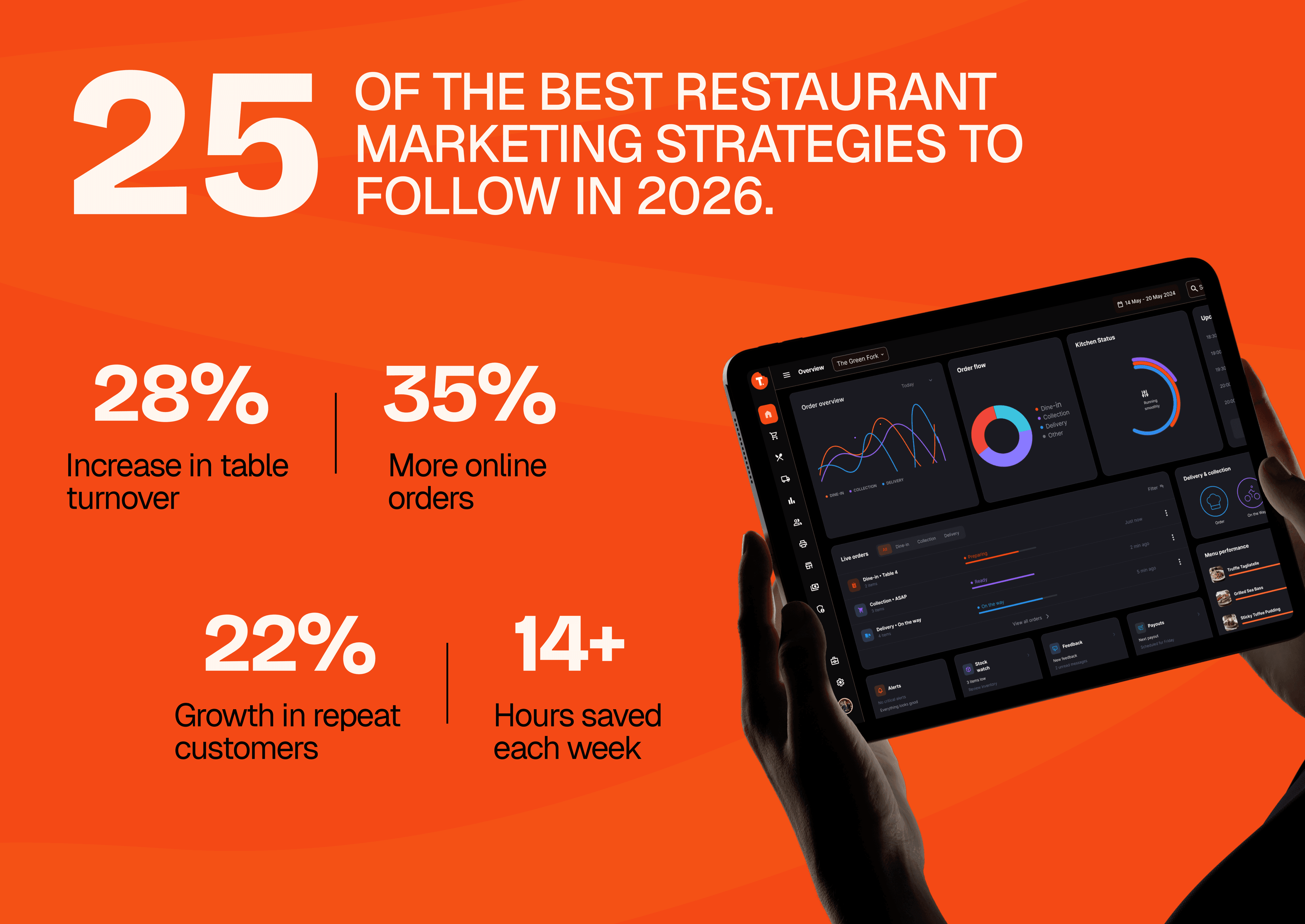
The hospitality sector in 2026 operates in a highly competitive digital environment where attracting and retaining diners requires an integrated, multi-channel approach. Implementing effective restaurant marketing strategies is no longer limited to printing flyers or running occasional newspaper ads. Today's restaurant owners, takeaway operators, caf??s, and food groups must coordinate digital discovery, online conversion, and long-term customer retention to build a profitable business.
A successful modern marketing plan relies on a simple three-stage framework:
- Discovery: How new local customers find your restaurant (e.g. Google Business Profile, local SEO, social media video, reviews, and targeted ads).
- Conversion: How interested diners become paying guests (e.g. mobile-friendly website design, commission-free direct online ordering, clear digital menus, and table bookings).
- Retention: How you encourage first-time guests to return again and again (e.g. automated digital loyalty programs, CRM audience segmentation, targeted promotions, and email/SMS communication).
This comprehensive guide details 25 practical restaurant marketing ideas for 2026 designed to help UK and international hospitality operators attract new guests, increase direct online orders, and build lasting customer relationships.
What Is Restaurant Marketing in 2026?
In 2026, restaurant digital marketing represents the total set of touchpoints and interactions through which a hospitality venue connects with guests before, during, and after their dining experience. Modern restaurant marketing spans local search optimization, web storefronts, first-party online ordering, social media engagement, review management, geo-targeted paid advertising, customer CRM data, loyalty rewards, and community partnerships.
Crucially, effective marketing does not stop once a customer submits their first order or completes a table reservation. Acquiring a new guest is significantly more expensive than encouraging a repeat visit. Consequently, modern hospitality marketing places equal emphasis on post-purchase engagement and customer retention as it does on top-of-funnel acquisition.
25 Restaurant Marketing Strategies to Follow in 2026
1. Optimise Your Google Business Profile
For local hospitality businesses, a fully optimized Google Business Profile (refer to Google Business Profile documentation for details) is a primary engine of local discovery. Over 70% of "restaurants near me" searches originate on Google Maps and Google Search. Ensure your profile displays accurate business details, trading hours, street address, contact number, updated food photos, primary cuisine categories, and a direct link to your official ordering page.
2. Build a Fast, Mobile-Friendly Restaurant Website
Your website serves as your digital front door. Modern guests expect a responsive, fast-loading mobile experience that answers key questions immediately: Where are you located? When are you open? What food do you serve? Can I order online? Can I book a table? Ensure your site features clear call-to-action buttons and effortless navigation.
3. Offer Direct Online Ordering
While third-party marketplaces (such as Deliveroo or Uber Eats) provide initial discovery, relying exclusively on them costs up to 30% in commission fees per order. Launching a commission-free first-party web store via first-party online ordering infrastructure allows you to accept direct collection and delivery orders while retaining full margin profit and customer contact data. For a comparison of leading software options, read our guide to the 5 best online food ordering systems for restaurants or explore our complete directory of 25 online ordering systems for restaurants.
4. Make Your Digital Menu Easy to Buy From
Digital menu design directly impacts conversion rates. Organize your menu into intuitive categories using flexible menu management tools, write concise dish descriptions, display clear pricing, offer structured modifier choices (e.g., sides, dietary preferences, spice levels), and include high-resolution food photography for signature items.
5. Improve Local Restaurant SEO
Strengthen your organic visibility by optimizing website pages for local search queries (e.g., "best pizzeria in [town]" or "takeaway in [neighborhood]"). Incorporate structured schema markup (LocalBusiness, Menu, ReserveAction) so search engines can render your menu items, opening hours, and booking options directly within search engine results pages (SERPs).
6. Actively Generate Genuine Customer Reviews
Online reviews heavily influence dining choices. Encourage satisfied guests to share feedback on Google, Tripadvisor, and Facebook by placing subtle prompts on digital receipt confirmation pages or takeaway packaging inserts. Never purchase fake reviews or violate platform policies with unauthorized incentives.
7. Respond to Both Positive and Negative Reviews
Active review management demonstrates guest care and boosts local search rankings. Thank positive reviewers warmly and address negative feedback with professional, non-defensive, and specific responses. Offer to resolve legitimate service issues offline via email or phone.
8. Create Better Food Photography
High-quality food imagery removes ordering hesitation and drives social engagement. Invest in professional or well-lit photography highlighting your signature dishes, seasonal specials, cocktail presentations, and restaurant atmosphere for use across your website, Google profile, and social channels.
9. Use Short-Form Video
Short-form vertical video (such as Instagram Reels and TikTok, refer to TikTok for Business hospitality guidance for details) dominates social food discovery. Publish engaging, short clips featuring kitchen dish preparation, sizzle shots of melting ingredients, chef cooking tips, staff introductions, and behind-the-scenes restaurant moments.
10. Build a Consistent Social Media Content Calendar
Maintain consistent brand presence by planning a structured social content calendar. Alternate between high-converting dish photos, team highlights, customer testimonials, seasonal menu launches, behind-the-scenes clips, and local community updates.
11. Encourage User-Generated Content
User-generated content (UGC) provides powerful social proof. Create visual dish concepts or memorable interior elements that prompt guests to photograph their meals and tag your restaurant's official social handle in their stories.
12. Work With Relevant Local Creators
Partner with hyper-local micro-influencers (5k—50k local followers) who cater to food lovers in your specific city or neighborhood. Invite local food bloggers to sample new seasonal menus in exchange for authentic video reviews and social posts.
13. Create Seasonal and Occasion-Based Campaigns
Capitalize on key hospitality dates across the calendar—such as Valentine's Day, Mother's Day, Easter, Halloween, Christmas, and local sports events. Launch dedicated holiday menus, pre-order catering packages via scheduled orders, and festive gift voucher promotions ahead of time.
14. Run Strategic Promotions Instead of Constant Discounts
Avoid continuous price discounting, which erodes profit margins and cheapens brand perception. Instead, deploy targeted promotional offers—such as a first-order discount, minimum-spend rewards (e.g., "Free side on orders over ??30"), or slow-day bundle deals using integrated promotions tools.
15. Create a Customer Loyalty Programme
Encourage repeat visits by introducing a structured digital loyalty rewards program. Rewarding guests with points for every pound spent or order completed via a native loyalty engine builds emotional brand affinity and incentivizes diners to choose your venue over competitors.
16. Use Customer CRM Data to Segment Your Audience
Leverage your customer CRM database to group guests by purchasing behavior: new first-time diners, frequent repeat guests, high-spending VIPs, or inactive customers who haven't ordered in 60 days. Build rich profiles using customer CRM software to tailor marketing messages specifically to each audience segment.
17. Use Email Marketing for Useful Customer Communication
Email marketing remains a highly effective channel for hospitality news. Send concise, visually appealing newsletters highlighting new seasonal menus, upcoming tasting events, holiday opening hours, and exclusive loyalty perks. Always collect proper marketing consent.
18. Use SMS Carefully for High-Intent Campaigns
Text message marketing offers near-instant open rates (up to 98%). Reserve SMS for time-sensitive, high-intent messages—such as exclusive flash discounts for quiet weeknights, instant order tracking alerts, or special event reminders.
19. Run Geo-Targeted Google Ads
Capture active local search intent by running geo-targeted Google Search Ads (refer to Google Ads local campaign guidance for details) for keywords like "restaurant near me" or "pizza takeaway in [town]". Direct ad traffic to dedicated landing pages or ordering menus with clear call-to-action buttons.
20. Use Meta Ads for Local Awareness and Retargeting
Deploy hyper-local Facebook and Instagram ads (refer to Meta Ads local targeting documentation for details) targeted to residents and office workers within a 1-to-3 mile radius of your venue. Use eye-catching video ads for brand awareness and retargeting ads for guests who visited your website without ordering.
21. Promote Collection as Well as Delivery
Encourage click-and-collect orders alongside delivery. Collection orders managed via collection orders eliminate third-party courier dispatch costs, allow kitchen teams to manage prep pacing, and give guests a fast pickup option without delivery fees.
22. Use QR Codes Strategically
Deploy QR codes with clear mobile destinations across physical touchpoints: table stands for QR table ordering, window stickers for digital menu browsing, and takeaway bag packaging inserts for direct ordering promotions.
23. Partner With Local Businesses and Community Organisations
Establish mutually beneficial partnerships with nearby offices, gyms, hotels, sports clubs, and theaters. Offer corporate lunch discount codes or co-branded perk vouchers to drive steady weekday customer traffic.
24. Measure Marketing With Customer and Order Analytics
Track key operational marketing metrics to understand campaign return on investment: order source distribution, direct vs marketplace order ratio, average order value (AOV), customer acquisition cost (CAC), and repeat customer retention rate using customer analytics and delivery analytics tools.
25. Turn First-Time Customers Into Repeat Direct Customers
Make customer retention the central goal of your marketing efforts. Convert one-time diners into direct regular guests by combining exceptional food and service with direct web ordering incentives, automated CRM follow-ups, and loyalty rewards.
Restaurant Marketing Strategies by Goal
The summary matrix below aligns key marketing strategies with primary operational goals:
| Marketing Goal | Primary Recommended Strategies |
|---|---|
| Get Discovered (Acquisition) | Google Business Profile, Local SEO, Short-form Video, Micro-influencers, Geo-targeted Ads |
| Increase Orders (Conversion) | Direct Web Storefront, Digital Menu Optimisation, QR Table Ordering, Strategic Bundle Promotions |
| Increase Repeat Business (Retention) | Digital Loyalty Programs, CRM Audience Segmentation, Email/SMS Marketing, Bounce-Back Inserts |
| Build Brand Awareness | Social Media Content Calendar, User-Generated Content (UGC), Food Photography, Community Events |
| Understand Performance | Customer CRM Analytics, Sales Reports, Campaign Tracking, Order Source Attribution |
Where TabTake Fits Into Restaurant Marketing
Effective restaurant marketing relies on reliable technology infrastructure to convert interest into revenue. TabTake provides that operational foundation by connecting your marketing channels directly with your front-of-house customer channels and back-of-house kitchen workflows.
While TabTake does not replace your social media posts or local creator partnerships, it empowers your venue to capture and retain the guests those marketing efforts generate:
- Commission-Free Direct Storefronts: Convert social and search traffic into high-margin orders via first-party online ordering.
- Branded Web Experience: Showcase your food with custom brand tokens on branded storefronts.
- Flexible Delivery & Collection: Manage custom delivery zones and pickup times via delivery orders and collection orders.
- Advance Orders: Accept bulk party pre-orders via scheduled orders.
- Seamless In-Venue Service: Streamline table ordering via QR table ordering and manage dining room capacity with integrated table reservations.
- Automated Kitchen Workflow: Route web orders directly to thermal printers with kitchen printing and track prep using the real-time order dashboard.
- Customer CRM & Data Ownership: Retain 100% guest ownership and build detailed profiles with customer CRM tools.
- Promotions & Loyalty: Launch targeted rewards programs using integrated promotions and loyalty engine tools.
- Multi-Location Operations: Maintain global menu defaults while enabling branch-level pricing overrides via multi-location management.
Restaurant Marketing Mistakes to Avoid in 2026
Avoid these ten common marketing pitfalls that drain budget and diminish brand credibility:
- Relying Exclusively on Delivery Marketplaces: Paying 30% commissions on repeat orders destroys profitability.
- Inconsistent Business Details: Displaying conflicting opening hours or phone numbers across Google, social media, and your website.
- Ignoring Online Reviews: Leaving customer reviews unanswered signals poor guest service.
- Posting Without a Strategy: Publishing random social media content without clear brand messaging or call-to-action links.
- Constant Price Discounting: Training customers to wait for discounts erodes perceived brand value.
- Purchasing Fake Followers or Reviews: Violating search platform policies damages organic search reach.
- Collecting Customer Data Without Consent: Failing to adhere to privacy and marketing regulations.
- Running Ads Without Tracking: Spending advertising budget without measuring conversion source data.
- Neglecting Mobile Web Optimisation: Operating an outdated website that is difficult to navigate on mobile devices.
- Focusing Only on Acquisition: Spending all budget on attracting new guests while ignoring customer retention.
Frequently Asked Questions
What are the best restaurant marketing strategies in 2026?
The most effective strategy combines local discovery (Google Business Profile, local SEO, short-form video), conversion channels (mobile website, direct online ordering), and retention tools (customer loyalty, CRM automation, targeted promotions).
How can I market my restaurant locally?
Focus on local search optimization: maintain an active Google Business Profile, collect positive customer reviews, run radius-targeted social media ads, and collaborate with neighboring businesses and local creators.
How can a restaurant get more online orders?
Offer commission-free direct ordering on your official website, add clear ordering links across your Google profile and social bios, run strategic promo codes, and use bounce-back packaging inserts for marketplace orders.
Is social media important for restaurants?
Yes. Short-form video platforms (Instagram Reels and TikTok) are primary channels for visual food discovery, allowing restaurants to showcase signature dishes, kitchen atmosphere, and special events to local diners.
How can restaurants encourage repeat customers?
Introduce a digital loyalty rewards program, send segmented email/SMS offers based on customer CRM data, deliver consistently great food and service, and provide an effortless direct ordering experience.
Does SEO work for restaurants?
Yes. Optimizing your website for local keywords and adding menu schema markup helps your venue appear at the top of Google Maps and local search results when nearby diners search for places to eat.
How often should restaurants run promotions?
Promotions should be strategic rather than continuous. Use targeted offers for first-time website orders, quiet weekday shifts, or seasonal holiday drops to protect brand value and profit margins.
Is direct online ordering a marketing strategy?
Yes. Direct ordering serves as a core conversion engine, enabling restaurants to convert passive digital traffic into sales while capturing customer CRM data for repeat marketing campaigns.
What restaurant marketing strategies work on a small budget?
Optimizing your Google Business Profile, creating organic short-form videos, encouraging customer reviews, building local business cross-promotions, and launching direct web ordering require minimal budget while driving strong return on investment.
How can TabTake help with restaurant marketing?
TabTake provides the digital ordering infrastructure that converts marketing traffic into sales. With commission-free direct ordering storefronts, kitchen printing, guest CRM profiles, and loyalty rewards, TabTake helps restaurants convert and retain more guests.
Final Thoughts: Market the Restaurant, Own the Relationship
Restaurant marketing in 2026 is about building a continuous cycle from initial discovery to long-term guest loyalty. Effective marketing creates a clear journey: Discovery — Order / Booking — Great Experience — Repeat Customer.
By combining strong local visibility with a first-party direct ordering storefront like TabTake, your restaurant can capture high-margin orders, own its customer data, and build a sustainable, profitable hospitality brand. Explore flexible plans on our pricing page or get in touch with our team today.